Human connection
Strengthen real-world human connections.

SUNY AI Partnership Project 3
Theme: Social Connection and Community Resilience
The challenge begins in
Artificial intelligence has the power to transform how we live, work, and connect. But technology creates its greatest value when it helps solve real human problems.
Led by the University at Albany AI & Society College, and funded by the SUNY AI for the Public Good Initiative, the AI for Good Challenge brings together students and faculty across four SUNY campuses (University at Albany, SUNY Oneonta, SUNY Cobleskill, and Hudson Valley Community College) to design AI-enabled solutions that address one of the most pressing social issues of our time: social isolation and loneliness. Participants will work in interdisciplinary teams to explore how AI can help reconnect people with their communities, strengthen social support networks, and improve access to meaningful opportunities for engagement.
Over two days, teams will move from problem discovery and human-centered design to prototype development, responsible AI assessment, and solution pitching. Along the way, participants will apply technical skills, creativity, ethical reasoning, and collaborative problem-solving to develop solutions that have the potential to create measurable social impact.
This Year’s Design Challenge
Rates of social isolation and loneliness have increased across age groups and communities. In Upstate New York, these challenges are often intensified by geographic dispersion, aging populations, limited transportation options, shrinking community institutions, and barriers to accessing local resources.
Participants are challenged to design solutions that:
This challenge is not simply about building technology. It is about designing responsible, inclusive, and practical solutions that address real community needs. Successful teams will demonstrate how AI can:
Join us as we explore how technology can help build stronger, more connected communities. Together, we can imagine and create AI solutions that put people first.
Design principles
Strong ideas, user-centered design, accessibility, responsible AI practices, and community impact are valued as highly as technical sophistication.
Strengthen real-world human connections.
Improve accessibility and inclusion and support rural and underserved populations.
Promote trust, privacy, and responsible innovation.
Rules and eligibility
The AI for Good Challenge is open to faculty as well as undergraduate and graduate students from all academic disciplines.
We encourage participation from individuals with diverse backgrounds, including:
Interdisciplinary collaboration is strongly encouraged.
Teams will have a maximum of ten members and will have representation from two or more institutions. Represented institutions will have a maximum of one faculty member as well as a minimum of two undergraduate and two graduate students.
If you are a student and do not have a team but would like to be part of one, please, fill the following expression of interest form.
Student form ↗If you are a faculty member and do not have a team but would like to be part of one, please, fill the following expression of interest form.
Faculty form ↗Deliverables
Working software prototype (for example, a lightweight web application, mobile app, dashboard, or chatbot) that demonstrates the core functionality of the proposed solution.
UI/UX wireframe or user journey map illustrating the intended user experience, key workflows, and user interactions.
Pitch deck (5 to 10 slides) describing the problem, proposed solution, AI methodology, anticipated benefits, target users, implementation strategy, and expected societal value.
Responsible AI assessment addressing ethics, bias, fairness, transparency, privacy, security, potential risks, unintended consequences, and mitigation strategies.
Teams should focus on developing a compelling proof of concept rather than a production-ready platform. Further, teams are encouraged to draw on diverse perspectives and skills, including community engagement, design, ethics, public policy, social sciences, health, and technology. Successful solutions will balance technical innovation with social impact, accessibility, and responsible AI considerations.
Resources
UI/UX design references and examples
Participants are welcome to use any tools that help them develop and communicate their solution. Technical expertise is not required to participate. Teams are encouraged to select tools that match their skills and project goals. Strong ideas, user-centered design, accessibility, responsible AI practices, and community impact are valued as highly as technical sophistication. Teams may use:
Tutorials and Learning Resources
Instructor: Prof. Mahdi Ahmadi
The AI for Good Challenge is structured as a two-day, problem-first, faculty-mentored design sprint. Rather than emphasizing coding alone, the event should guide interdisciplinary student and faculty teams across campuses through a sequence of activities that includes:
The goal for Day 1 is to understand the problem, define the user, identify barriers to connection, and design an AI-enabled solution that strengthens participation in community life. The main question teams will work on is: Who is experiencing social isolation, why is it happening, and how can AI help reconnect them to community life?
By the end of Day 1, teams should have:
Expected output for Day 1 is a validated solution concept, not a prototype. In other words, teams should end Day 1 knowing: “This is the problem we are solving, for these users, and this is how our AI-based solution creates meaningful community connections”.
Participants check in, receive materials, meet students from other campuses, and enjoy breakfast
Welcome from UAlbany’s Provost and AI & Society College leadership; guest speaker on responsible innovation, including privacy, bias, transparency, accessibility, safety, human oversight, and potential unintended consequences
Introduction to event objectives, challenge, schedule, rules, resources, judging process, and expectations; review logistics and schedule for the day and confirm available organizers
Teams create problem statement (who is experiencing social isolation?, why is isolation occurring?, what are the consequences?), user profile (target user, context, needs, strengths, constraints), and community connection barrier analysis (e.g., transportation, lack of information, language barriers, low confidence,…)
Teams continue problem discovery and user understanding
Teams submit a one-paragraph problem statement, a primary user profile, and a community connection barrier analysis; organizers share reminders
Teams develop their concept, taking into account deliverables’ characteristics and judging criteria
Teams submit solution overview, user journey map, description of AI functionality, and human connection strategy; organizers share reminders
Teams work on the end of the day concept review, which includes information about problem, user, barrier, proposed solution, and user journey; teams’ faculty challenge assumptions and help refine concepts; teams plan for Day 2
Teams submit the end of the day concept review; participants complete a short reflection and receive Day 2 instructions
The goal for Day 2 is to develop a prototype, evaluate its impact and responsibility, and communicate a compelling vision for implementation and scale. The main question teams will work on is: Can we demonstrate that this idea is feasible, responsible, and capable of creating real-world impact?
By the end of Day 2, teams should have:
Expected output for Day 2 is a prototype-supported proposal that demonstrates community need and relevance; social impact, equity, and accessibility; responsible use of AI, privacy and trust; and feasibility and sustainability.
Teams reconnect, review plans, and resolve immediate technical or logistical issues
Organizers review the submission deadline, presentation format, judging criteria, and available support
Teams develop the primary functions, workflow, model, interface, visualization, mockup, or technical demonstration
Teams report status using a simple green, yellow, or red indicator, identify any critical obstacles, and review the following questions: 1) how does the solution reduce social isolation?, 2) what human connection is being created?, 3) how are equity and accessibility addressed?, 4) what risks have been identified and how are they going to be addressed?, and 5) would this work in a rural or small-town setting?
Teams review prototype and continue development
Teams conduct a responsible AI assessment that addresses ethics, bias, fairness, transparency, privacy, security, potential risks, unintended consequences, and mitigation strategies
Teams complete documentation, record backup demonstrations if needed, and rehearse presentations
All required materials are locked for judging
Teams move to presentation stations or prepare the main presentation room
Judges rotate among team stations
Participants complete reflections about the event while judges deliberate
Winners are announced; community partners and organizers recognize all participants and identify opportunities for continued development
Submission requirements
Submissions will be collected through Microsoft Forms for standard file formats (e.g., pitch deck and responsible AI assessment). Code repositories, prototypes, and other materials may be submitted via a cloud storage service such as OneDrive. Submissions will automatically receive a timestamp. Late submissions could remain eligible for participation and feedback but become ineligible for competitive awards unless the delay resulted from a documented event-wide technical issue.
Judging criteria
The team with the highest score will receive $3,000 total in gift cards to be distributed among participating students.
The team with the second highest score will receive $2,000 total in gift cards to be distributed among participating students.
The team with the third highest score will receive $1,000 total in gift cards to be distributed among participating students.




Responsible AI Innovation in the Public Sector: Characterizing Accountability from a Citizen Perspective
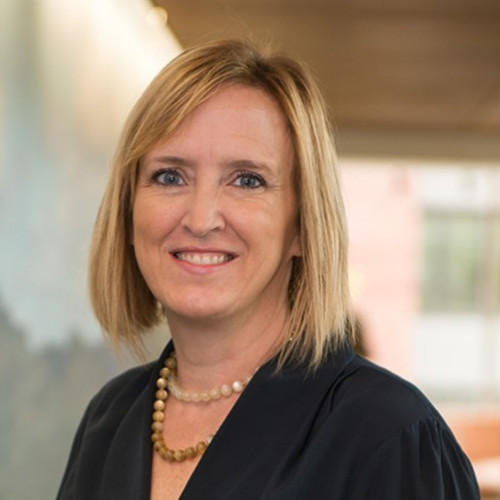
LinkedIn profile ↗J. Ramon Gil-Garcia, Ph.D., is a Full Professor of Public Administration and Policy and the Director of the Center for Technology in Government, University at Albany, State University of New York (SUNY). Dr. Gil-Garcia is a Fellow of the National Academy of Public Administration in the United States. In 2009, Dr. Gil-Garcia was considered the most prolific author in the field of digital government research worldwide and in 2018 and 2019 was named “One of the World’s 100 Most Influential People in Digital Government” by Apolitical, a nonprofit organization from the United Kingdom. In 2021, he was one of the recipients of the two inaugural Digital Government Society Fellows Awards. He is also a professor at Universidad de las Américas Puebla in Mexico, a Faculty Affiliate at the National Center for Digital Government at the University of Massachusetts Amherst, and an Affiliated Faculty member of the Information Science Doctorate Program at the University at Albany. His research interests include collaborative digital government, smart cities and smart governments, artificial intelligence in government, emerging technology adoption and implementation, digital divide policies, digital government success factors, and multi-method research approaches.
General Information
It is a partnership between the University at Albany, SUNY Oneonta, SUNY Cobleskill, and Hudson Valley Community College to strengthen AI teaching and research across the region. It includes four coordinated initiatives:
The AI for Good Challenge is a two-day innovation competition that brings together students and faculty from diverse disciplines to design AI-enabled solutions that address a significant social challenge. This year's focus is social isolation and loneliness, with an emphasis on strengthening community connections and improving participation in community life.
Participants are asked to address the following question: How might we use AI to reconnect socially isolated individuals with the people, places, organizations, and services that can strengthen their sense of belonging and participation in community life?
The challenge is open to both undergraduate and graduate students as well as faculty from all academic disciplines. Teams with technical, design, social science, public policy, health, business, and other backgrounds are encouraged to participate.
No. Technical expertise is not required. Teams are encouraged to combine diverse skills and perspectives. Strong ideas, user-centered design, accessibility, responsible AI practices, and community impact are valued as highly as technical implementation.
Yes. The challenge is designed to be accessible to participants with varying levels of experience. Resources and learning materials will be provided to help participants get started.
Teams
No. However, we can help you find a team. If you are a student please, fill the following expression of interest form. If you are faculty member, please, fill the following expression of interest form.
Yes. Teams may register together if they already have a group assembled.
Teams will have a maximum of ten members and will have representation from two or more institutions. Represented institutions will have a maximum of one faculty member as well as a minimum of two undergraduate and two graduate students.
Absolutely. Interdisciplinary teams are strongly encouraged because successful solutions often require technical, social, design, and policy perspectives.
Technology and Development
No. Teams are expected to develop a proof of concept that demonstrates the key ideas behind their solution. Judges will evaluate both the concept and its implementation.
Teams may use any appropriate tools, including:
Yes. Participants are encouraged to use AI tools responsibly and transparently as part of their development process.
Yes. Teams may use publicly available libraries, frameworks, and tools, provided they comply with applicable licensing requirements and properly acknowledge their use.
Deliverables
Each team must submit:
Teams should discuss:
Judging
Projects will be judged on:
Not necessarily. Judges will evaluate how well solutions address the challenge, create social value, promote accessibility and inclusion, and use AI appropriately. Technical sophistication is only one component of evaluation.
Yes. Solutions should consider the needs of rural communities, aging populations, individuals with limited digital literacy, and people from diverse linguistic and cultural backgrounds.
The goal is to design solutions that help people connect with other people, organizations, services, and community activities. Successful solutions will demonstrate how AI supports real-world engagement rather than replacing it.
Event Logistics
Participants should bring:
Yes, breakfast and a light lunch will be served during both days.
Yes. Information about Internet access will be available during the first day of the event.
Teams will present their solutions to a panel of judges. Awards will be presented following judging and deliberation.
Intellectual Property
Teams retain ownership of the ideas, code, designs, and materials they create during the event unless otherwise specified by the organizers.
Yes. By participating, teams grant organizers permission to showcase project summaries, presentations, screenshots, and demonstrations for educational and promotional purposes, with appropriate attribution.
People behind the challenge
The AI for Good Challenge would not have been possible without the participation of the following individuals:
Jianwei Zhang, Mahdi Ahmadi, Zheng Wu, Chanhee Choi, Nathan Dahlin, Rukhsana Ahmed, Ohbet Cheon, Luyi Jian
Ian MacDonald, Grace Begany, Andrew Magnuson
Sen Zhang, Steve Maniscalco, Gina Solano
Tyler H. Kessel, Peter Sawyer, Shawna-Kay E Addison, Jaya Dasgupta, Jodi Mather, Robert Braathe, Danielle R. Blesi, Linda Lim, Colleen Bartels, Sara Martin
Please, for additional information or inquiries about the AI for Good Challenge, contact:
Sponsors